
The $5 Signal Booster Scam That Refuses to Die - Signal Boosting Stickers
Posted by Gordon Reed on 9th Apr 2026
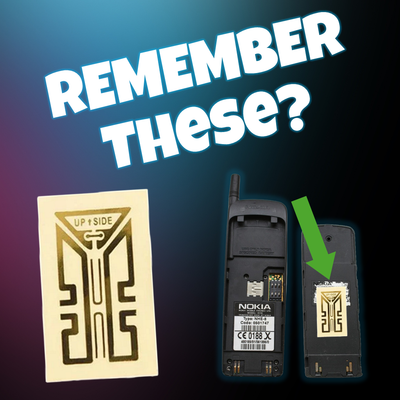
If you were around in the early 2000s, you probably remember the wave of “cell phone signal boosting” stickers. These were small adhesive patches, often metallic and patterned, that promised to improve reception, reduce dropped calls, and even extend battery life.
They were marketed as simple, passive upgrades. Just stick one on your phone, and your signal improves.
Fast forward to today, and surprisingly, these products still exist. The branding has evolved, now referencing 4G, LTE, and even 5G, but the core idea remains exactly the same.
The problem is that from an RF engineering standpoint, these products never worked. And more importantly, they could not work.
What Were These Antenna Stickers?
These so-called “boosters” were typically:
- Thin adhesive-backed metallic foils
- Printed with decorative or pseudo-fractal conductive patterns
- Installed under a removable battery or on the back of a phone
What they did not include is far more important:
- No coaxial connection
- No feed point
- No impedance matching network
- No defined ground reference
They were completely passive and completely disconnected from the phone’s actual antenna system.
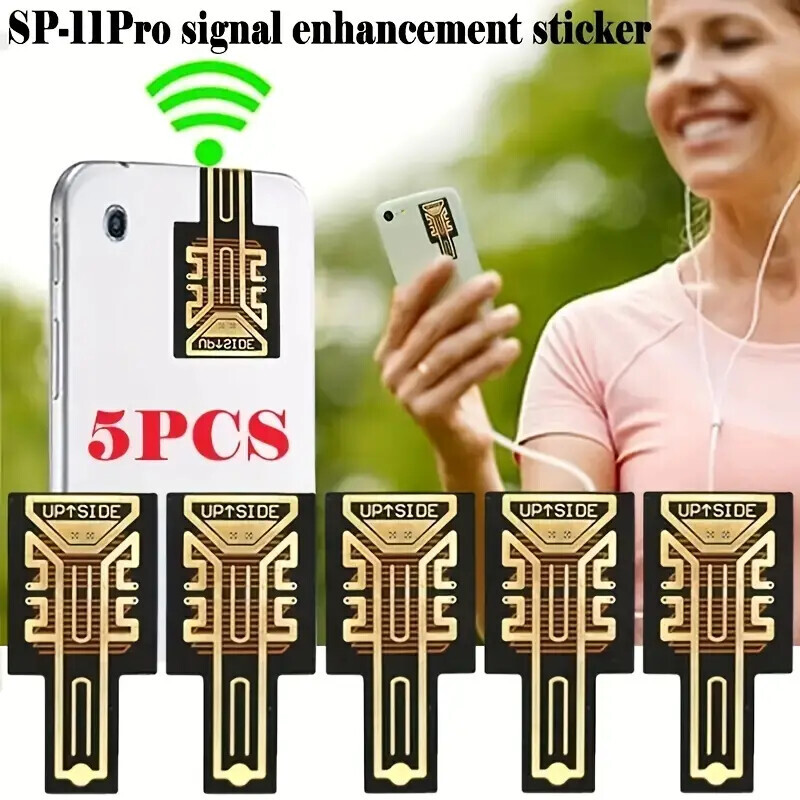
Here are some actively available for purchase examples I found on eBay of what to watch out for.

The Critical Flaw: No Connection to the Antenna System:
This is the single most important reason these products fail.
These stickers were never electrically connected to the phone’s antenna. There was no feedline, no coupling structure, and no intentional integration into the RF path.
In RF systems, energy transfer requires one of two things:
- A direct electrical connection
- A deliberately engineered coupling mechanism
These stickers had neither.
Without a connection, there is no meaningful way to transfer RF energy into or out of the antenna system. That means:
- No improvement in transmitted power
- No improvement in received signal strength
- No control over antenna behavior
If there is no RF path, there is no RF performance gain. It really is that simple.
What Actually Happens When You Add One:
Even though these stickers cannot improve performance, they can still interact with the antenna system in small, uncontrolled ways. Because the sticker is conductive, it can slightly alter the electromagnetic environment around the antenna.
This can lead to:
- Shifts in resonant frequency
- Increased mismatch (higher return loss)
- Elevated VSWR
- Reduced radiation efficiency
Bottom Line: In practical terms, if the sticker has any measurable effect at all, it is far more likely to make performance worse rather than better.
Not a Booster, Not Even a Functional Antenna:
These products are often described as “boosters,” but that term alone raises a red flag.
- A passive device cannot amplify signal
- Gain requires either directivity or active amplification
- These stickers provide neither
They do not increase signal, redirect energy, or enhance reception in any controlled way.
Why People May Have Thought They Worked:
Despite the lack of any real RF mechanism, many users believed these products improved their signal.
- Placebo Effect
Expectation plays a significant role. If you believe a change will help, normal variations in performance can feel like confirmation.
- The Battery Reset Effect
Many of these stickers were installed under removable batteries.
This process:
- Powers the phone off
- Forces a network reconnection
That reconnection alone can temporarily improve signal, leading users to credit the sticker.
Modern Versions of the Same Scam:
These products never truly disappeared. They have simply been rebranded.
Today, you will still find:
- “5G signal boosters” in sticker form
- “EMF harmonizers”
- “Quantum signal enhancers”
They often include:
- Technical-looking diagrams
- Complex but meaningless terminology
- Claims that cannot be verified with real RF measurements
The underlying problem remains unchanged. No connection means no performance improvement.
How to Identify RF Scams Like This:
Understanding a few core principles makes these products easy to spot.
Immediate Red Flags
- No physical RF connection to the device
- Claims of boosting without power input
- Vague or non-technical language
- No mention of frequency bands
Missing Engineering Data:
Legitimate RF products are supported by measurable data, such as:
- Return loss (S11)
- VSWR
- Radiation patterns
- Gain across specific frequency ranges
If none of this is provided, there is no evidence the product works.
What Actually Improves Cellular Signal:
Real performance improvements come from properly engineered solutions.
- External antennas with direct RF connections
- Designs tuned for specific frequency bands
- Proper impedance matching, typically 50 ohms
- Consideration of placement, ground plane, and cable loss
Performance can be validated using real metrics like:
- RSRP
- SINR
- RSRQ
These are measurable, repeatable indicators of improvement.
Why This Still Matters Today:
Products like these persist because they are inexpensive to produce and easy to market.
As wireless technology becomes more complex, it becomes easier for misleading claims to sound believable, especially when they include technical language without real substance.
Having a basic understanding of RF fundamentals makes it much easier to separate real solutions from ineffective ones.
What This Means for You:
If a product is not electrically connected to your antenna system, it cannot improve your signal.
Cell phone antenna stickers never worked, and they still do not. At best, they do nothing. At worst, they introduce small inefficiencies that can degrade performance.
Real improvements come from engineered antenna systems designed with proper RF principles and backed by measurable data.
Understanding that difference is the key to making informed decisions and avoiding products that promise results they cannot deliver.